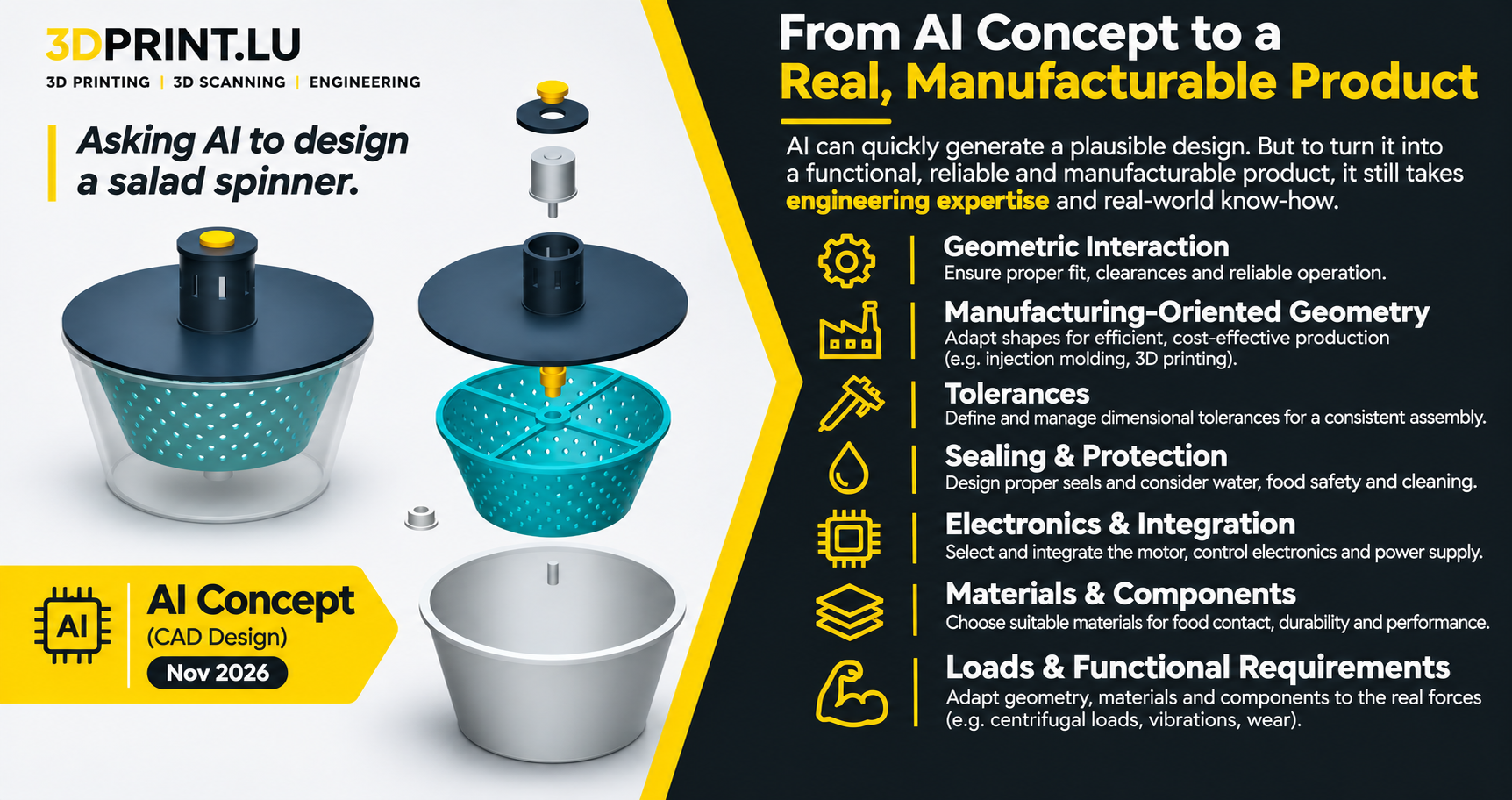
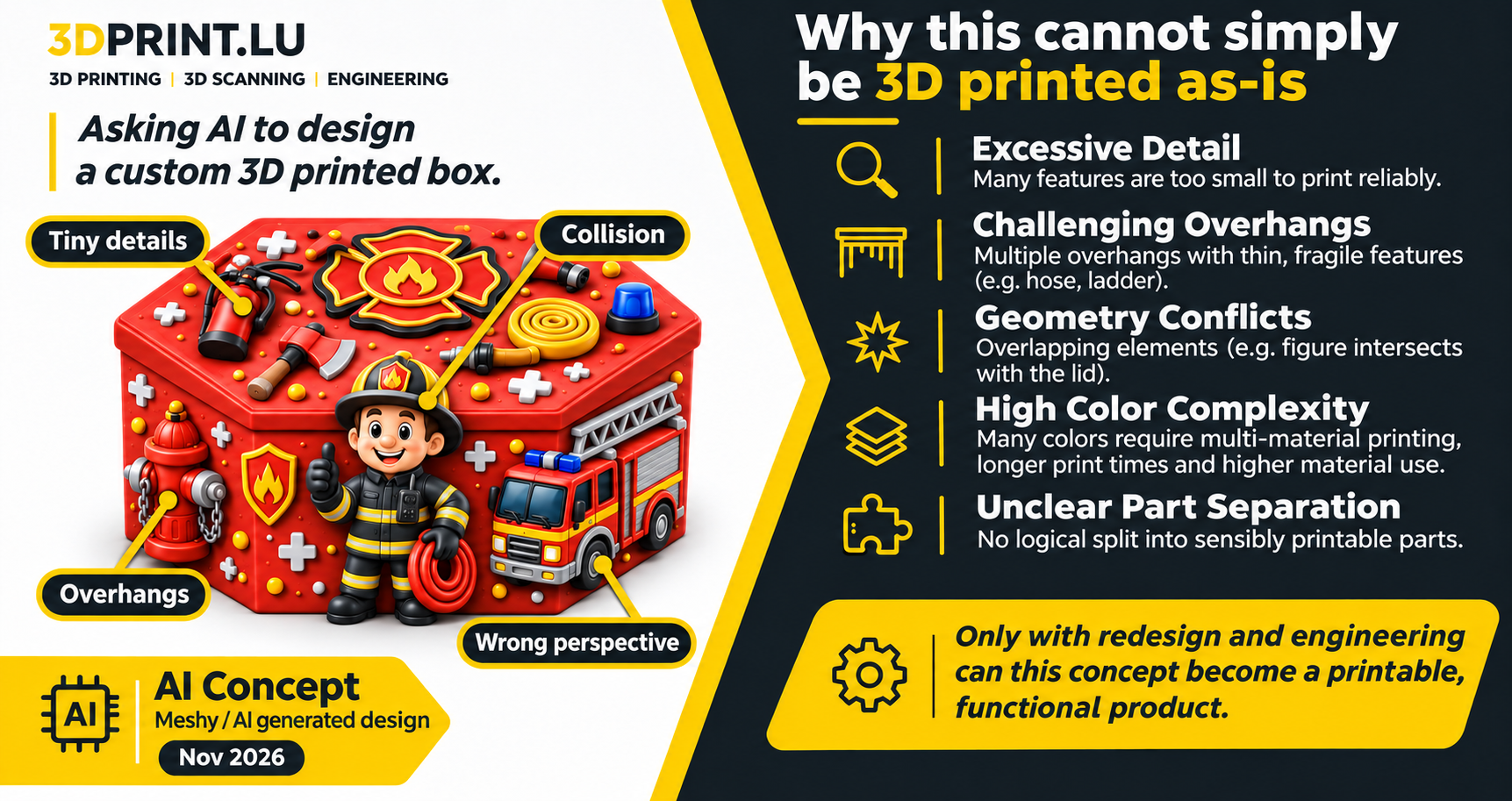
AI Can Generate a 3D Model. But Can It Make It Work?
The Limits of AI – Why Human Expertise Still Matters
AI can turn a simple prompt into an impressive 3D model in seconds. But a convincing shape is not necessarily a functional, manufacturable product.
Real engineering starts where the prompt ends.
Every project comes with its own challenges. Mechanical loads, material behavior, tolerances, assembly requirements and manufacturing constraints all demand individual decisions.
Even a seemingly simple 3D print requires the right material, orientation, wall thickness and process parameters. Small changes can make the difference between a reliable component and a failed part.
The same applies to 3D scanning and reverse engineering. A scanner captures geometry, but it doesn’t explain a component’s function or which dimensions are critical.
Reproducing a part requires more than copying its shape. It requires understanding how it works.
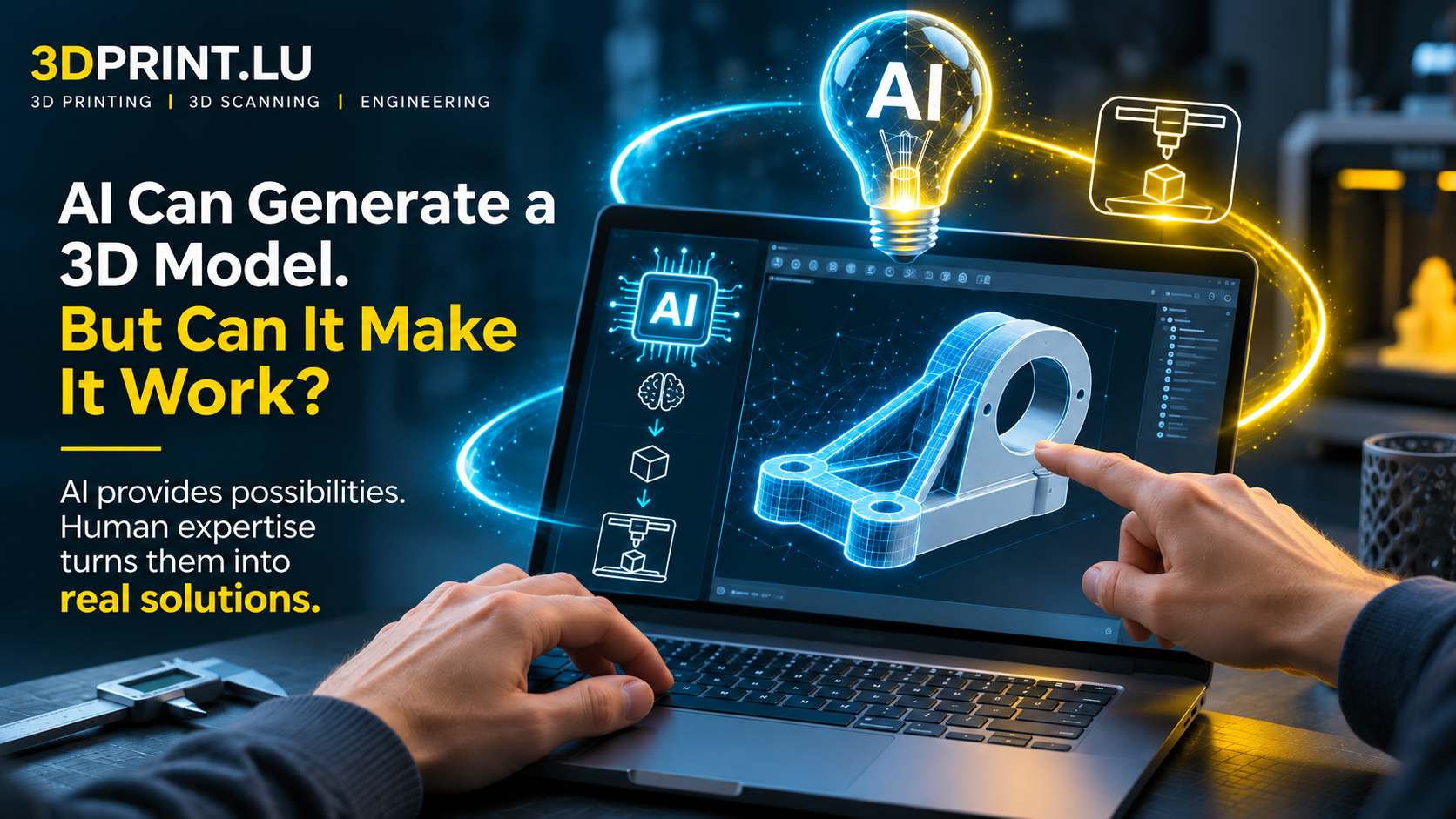
AI is a tool. Experience makes the difference.
AI performs well when tasks are clearly defined. But real engineering projects often begin with incomplete requirements, unexpected problems or ideas that have never been tested.
Finding the right solution requires engineering knowledge, spatial understanding, practical experience and the ability to connect them.
At AMSOL s.à r.l. – 3DPrint.lu, we combine 3D printing, 3D scanning, reverse engineering and engineering expertise to turn customer files, physical components and new ideas into real, functional products.
We use AI and other technologies where they add value. But knowing how to apply them is what makes the difference.
Because the real challenge isn’t simply creating a 3D model.
It’s creating something that works.