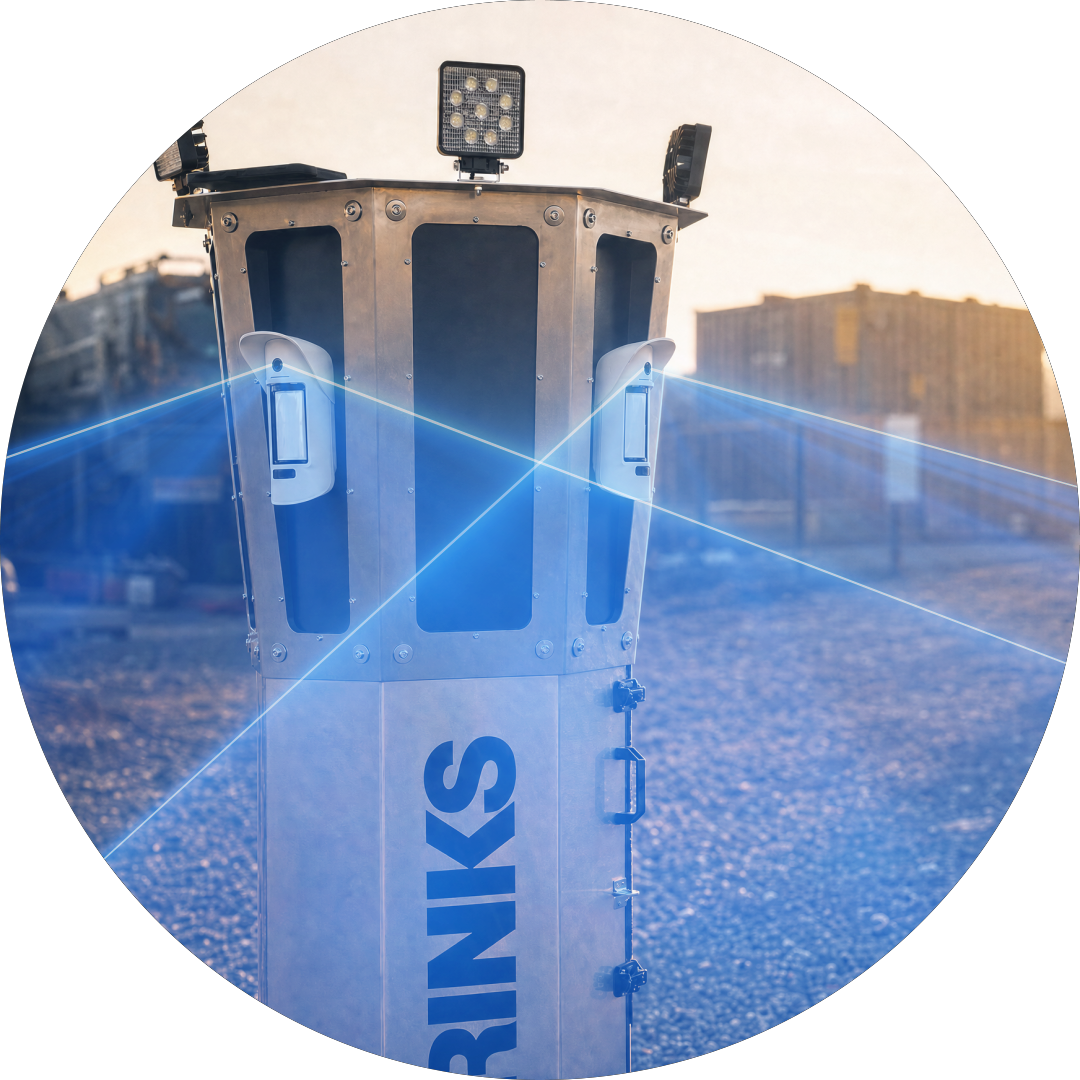
Brink’s Tower — Combining 3D Printing and Metal Fabrication for Smarter Assembly
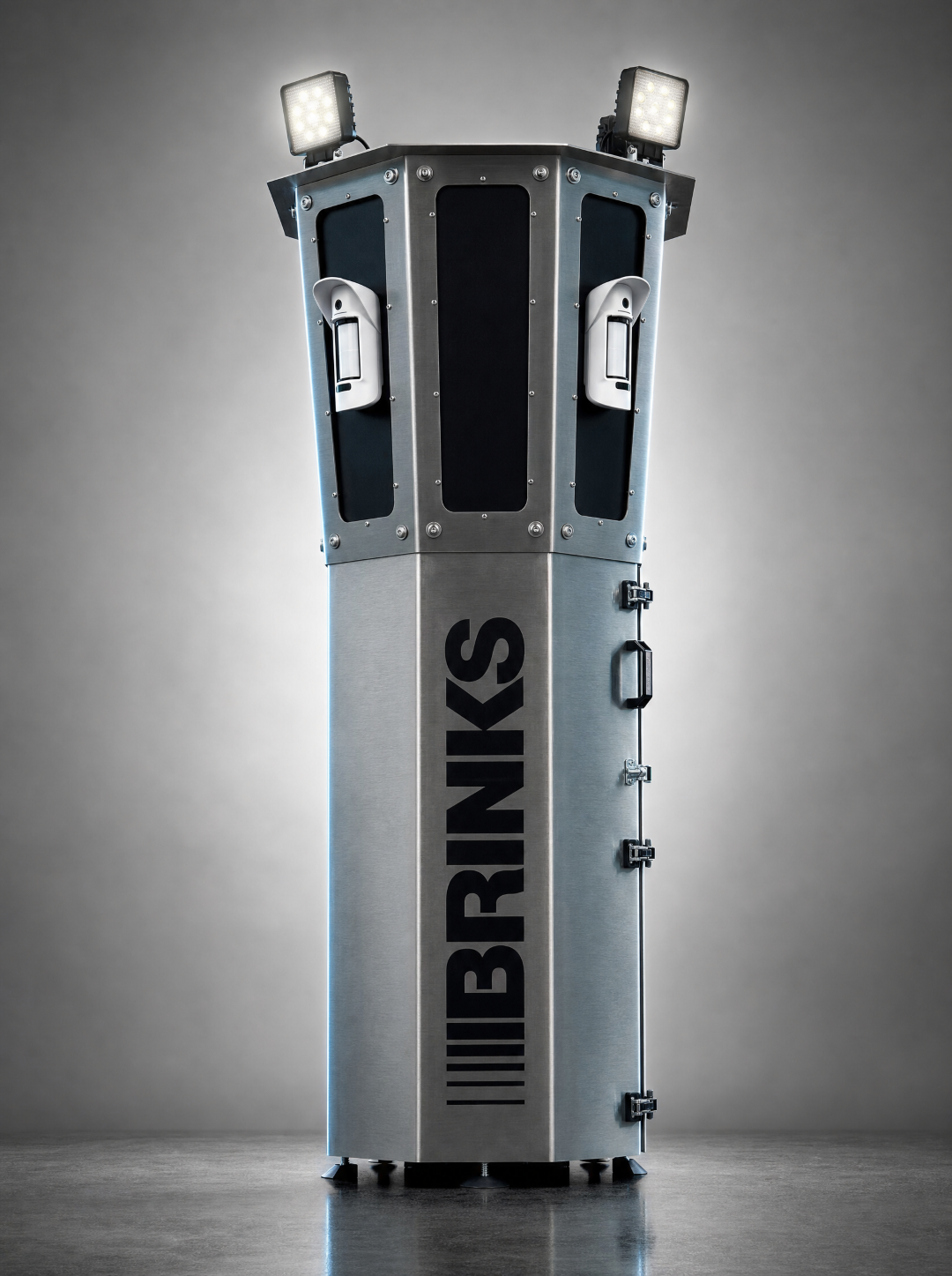
For the development of the Brink’s Tower, AMSOL s.à r.l. – 3DPrint.lu was responsible for the product development, mechanical design, engineering and production of the complete structure.
The project started by working closely with the client to define the functional, technical and visual requirements of the product. Based on these requirements, we developed first sketches, explored different construction concepts and evaluated how the individual functions could be integrated into a compact, robust and professional-looking system.
From these initial concepts, the design was progressively refined into a manufacturable product. Particular attention was given to the overall structure, accessibility of the internal components, assembly sequence, integration of the technical equipment and the choice of suitable manufacturing processes.
Rather than designing the Brink’s Tower around a single production method, we developed a hybrid construction combining aluminium extrusion profiles, bent sheet metal and 3D-printed components. Each process was used where it offered the greatest advantage in terms of strength, flexibility, production time and assembly.
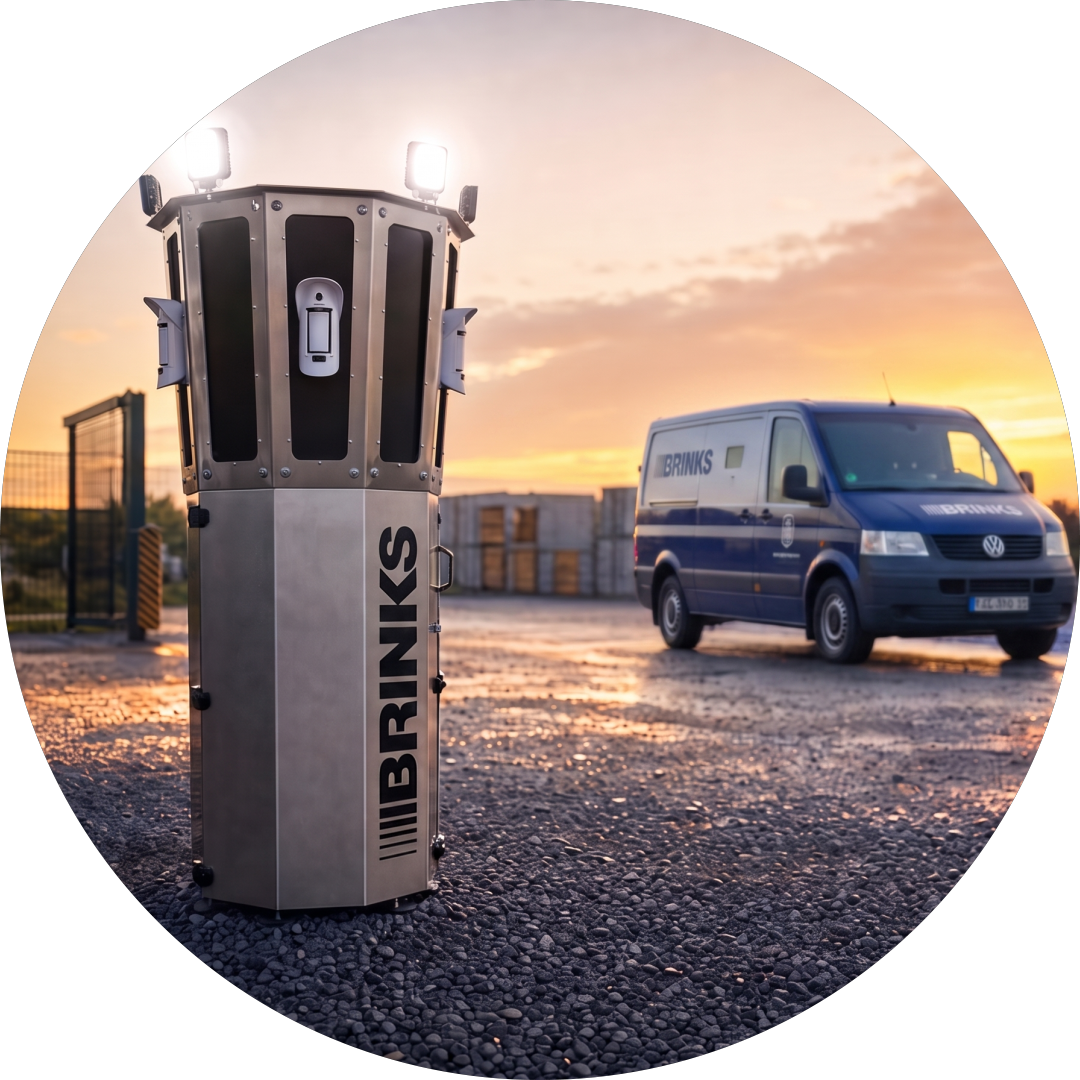
The extrusion profiles form the structural framework, while the sheet-metal parts create the main exterior surfaces and functional sections of the enclosure. 3D printing was used strategically to solve more complex interfaces between these elements and to integrate features that would otherwise have required additional machining, brackets or several individual components.
By considering production and assembly already during the design phase, complex interfaces could be simplified, the number of individual parts and fastening operations reduced, and the final assembly made faster and more repeatable. At the same time, additive manufacturing provided the freedom to integrate mounting points, cable routing and smooth geometric transitions directly into the components.
The result is a robust and professional product developed from the first concept through to final production, combining the efficiency of standard metal components with the flexibility of additive manufacturing.
The Brink’s Tower is a good example of how a structured product development process and the intelligent combination of different manufacturing technologies can turn an initial set of requirements into a production-ready solution.